
Why Do Your Eyes Feel So Tired Even After You Sleep For Eight Whole Hours Every Day
Many overlooked tiny daily behaviors that most people never pay attention to impose continuous hidden burden on your eyes, and gradually bring unnoticeable long-term risks to your visual health.
You may have gone through this exact scenario hundreds of times in the past month: you set your alarm to wake you up 10 minutes earlier, lie in bed scrolling through social media feeds for 15 minutes before getting up, watch short videos on your phone during the 40-minute commute to work, sit in front of your office screen for 8 consecutive hours to finish tasks, and spend another two hours browsing drama clips and online content before going to bed. Even if you make sure you get a full 8 hours of sleep every night, you still feel a distinct heavy, soreness behind your eyes when you wake up, and your vision gets blurry every time you shift your sight from the screen to objects far away. Most people simply attribute this tiredness to age changes or insufficient rest, but few ever connect the discomfort to those tiny, repeated habits they follow every single day.
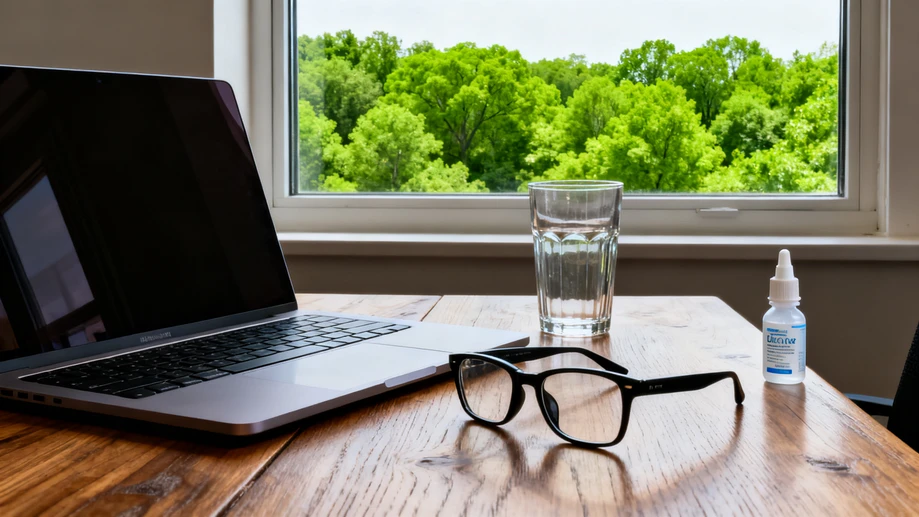
A lot of popular so-called “eye protection hacks” you see online are actually doing more harm than good to your visual health. Many people keep a bottle of cooling eye drops on their desk and drop a few drops into their eyes every time they feel a little dry, without knowing that most of these over-the-counter cooling eye drops contain added menthol and vasoconstrictor ingredients that bring a temporary refreshing feeling, but will damage the natural stability of your tear film after long-term use, making your dry eye symptoms far more serious than before. Other people have formed the habit of wearing tinted sunglasses even when driving through poorly lit tunnels, the extreme contrast between bright outdoor sunlight and dark tunnel environment forces your pupils to shrink and expand violently in a very short period of time, putting a far larger burden on your ciliary muscles than two consecutive hours of screen time.
Even the widely promoted 20-20-20 eye protection rule is often executed in the wrong way by most people. The rule claims that every 20 minutes of screen time, you need to look at something 20 feet (around 6 meters) away for at least 20 seconds to relax your eyes, but a lot of people choose to stare at small text on distant billboards or product signs across the street to meet the standard. This behavior makes your eyes still work hard to focus on tiny clear details, and your ciliary muscles never get the chance to fully relax, so the whole process does nothing to relieve existing eye fatigue. If you want to get the desired effect, you can try to look at the soft outline of distant tree tops, flying birds or roof peaks, and let your eyes rest completely without any need to focus on clear small details.
Most people do not realize that your eyes perform an average of 15 to 20 involuntary blinks every minute under normal daily conditions, which can help spread a thin layer of tear film evenly across the surface of your eyeball to keep it moist and comfortable. But this natural blinking frequency will drop sharply to less than 5 times per minute when you are focused on playing video games, typing a work report or watching an attractive TV series. Without enough frequent blinks, the tear film on your eye surface will break in less than 10 seconds, leading to the obvious gritty dry feeling many people describe as “having sand in the eye”. A lot of people will rub their eyes hard the moment they feel this discomfort, which will scratch the tiny damaged surface of the cornea and make the situation even worse, instead of relieving the irritation.
You do not need to buy expensive high-tech eye massagers or special nutritional supplements to protect your eyes effectively, a few tiny adjustments to your daily routine can bring far more obvious effects. Adjust the height of your work screen to 10 to 15 degrees lower than your natural horizontal line of sight, this small change will let your upper eyelids droop naturally to cover more area of the eyeball surface, cutting the evaporation speed of your tear film by nearly 50 percent and reducing the chance of getting dry eyes after long hours of work. You can also set a reminder twice a week to close your eyes completely for 5 minutes, do not listen to any audio, do not think about upcoming work tasks, and let all the muscles around your eyes relax fully. This short 5-minute break can bring better relief to accumulated eye fatigue than 30 minutes of extra afternoon nap.