Can You Actually See What You Think You See?
The Astonishing Science Behind Visual Illusions and Everyday Sight
You glance at a spinning dancer silhouette online – is she twirling clockwise or counter-clockwise? This simple animation exposes a profound truth: your eyes capture light, but your brain creates the movie. Optical illusions aren't tricks; they're windows into the complex, often surprising, way our visual system interprets the world. Your eyes aren't flawless cameras sending pristine images to your mind. Instead, light bouncing off objects enters through your cornea (the clear front surface), passes through the pupil (the adjustable black opening), gets focused by the lens (which changes shape to see near and far), and finally hits the retina – a thin layer of tissue lining the back of your eye, packed with millions of light-sensitive cells called rods and cones.
Think of your lens like the autofocus on a sophisticated camera, constantly flexing and adjusting. Unlike glass, it's made of flexible, living tissue. By changing its shape (a process called accommodation), it bends incoming light rays precisely to land on your retina. As we age, this lens gradually stiffens, making it harder to focus on close-up objects, leading to the common need for reading glasses. Imagine the retina as the camera's film or sensor, but far more intricate. Rod cells excel in low-light conditions, allowing you to navigate a dimly lit room, while cone cells are responsible for sharp, detailed central vision and our perception of vibrant color. The most crucial spot on the retina is the macula, particularly its center, the fovea – packed densely with cones, it gives you the sharp vision needed for reading, driving, and recognizing faces.
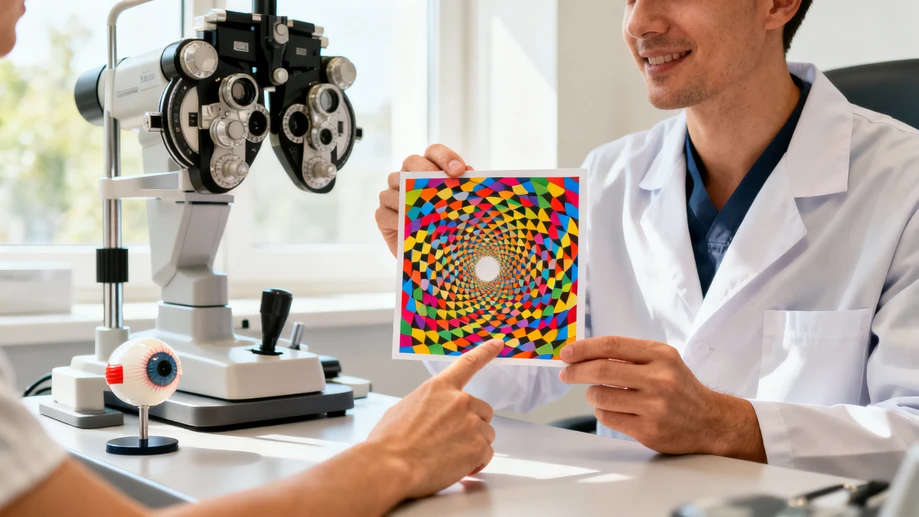
So, the optical nerve – your high-bandwidth cable to the brain – carries this raw electrical signal generated by the retina. But here's the mind-blowing part: your brain doesn't just passively receive a picture. It actively constructs your visual reality. It fills in gaps based on past experiences, makes educated guesses about depth and motion, and interprets patterns – sometimes incorrectly, as illusions prove. It prioritizes important information (like potential threats) and filters out the constant, minor eye movements (called microsaccades) that prevent your vision from fading into a blur. This constant interpretation is why two people can look at the same ambiguous image and perceive different things. It's not faulty vision; it's your brain's best, efficient effort to make sense of incomplete data.
Many everyday myths cloud our understanding of vision. Staring at a computer screen won't physically 'burn' your retinas, though it can cause significant eye strain and dryness (remember the 20-20-20 rule: look 20 feet away for 20 seconds every 20 minutes). Eating carrots won't grant you night-vision superpowers; they're good for eye health, but so are many other foods rich in vitamins C, E, lutein, and omega-3 fatty acids found in leafy greens, citrus, nuts, and fish. Wearing glasses prescribed for someone else is uncomfortable and gives you a headache, but it won't permanently damage your eyes. Reading in dim light strains your eyes but doesn't cause long-term harm. Understanding these truths helps us focus on the real threats and practical care.
Protecting this incredible, complex system is vital. Shield your eyes from ultraviolet rays with quality sunglasses that block 100% UVA/UVB rays – even on cloudy days. Wear protective eyewear during sports, DIY projects, or using chemicals. Manage chronic conditions like diabetes and hypertension meticulously, as they can severely impact vision through conditions like diabetic retinopathy or vascular issues. Attend regular comprehensive eye exams, not just for updated prescriptions. These exams can detect silent threats like glaucoma (high pressure damaging the optic nerve), macular degeneration (deterioration of the central retina), cataracts (clouding of the lens), and even signs of systemic diseases like diabetes or high blood pressure long before other symptoms appear. Your vision is precious; proactive care is the best defense.