Do You Know What Your Eyes Reveal About Your Heart Health?
Your retinas might hold secrets your cardiologist wants to see
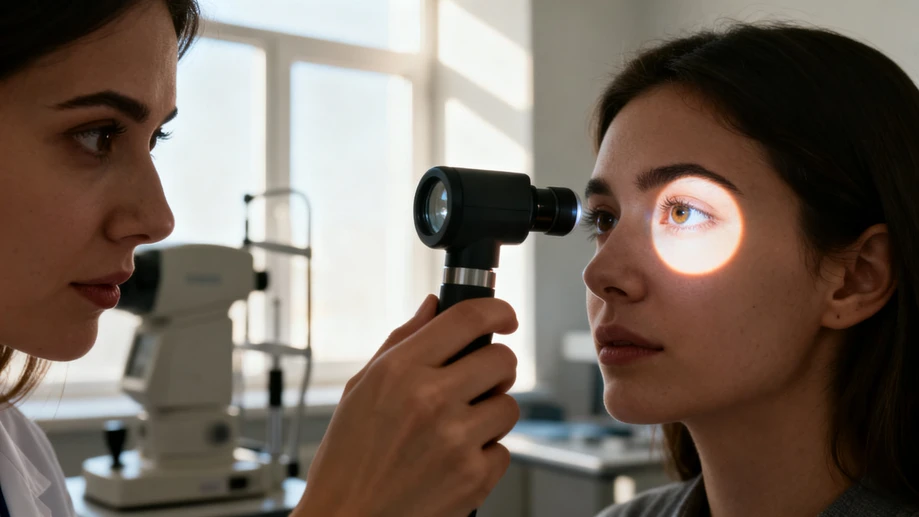
Picture this: your optometrist shines a light into your eyes during a routine checkup and casually mentions they're checking more than just your vision. That tiny beam is actually a window to your cardiovascular system. Your retinas contain micro-vessels so sensitive they often show damage from high blood pressure years before other symptoms appear. Doctors can spot arterial stiffness, cholesterol buildup, and even signs of impending stroke just by examining the unique patterns in the back of your eye. This non-invasive peek makes eye exams a surprisingly powerful early warning system. Like miniature crystal balls, your eyes might just predict your heart's future.
Beyond heart secrets, your eyes are constantly performing microscopic miracles. Each blink creates a perfectly engineered tear film with three distinct layers: an oily coating to prevent evaporation, a watery middle layer for hydration, and a mucus base that sticks to your cornea. This complex system renews itself every 5-10 seconds, washing away dust and pathogens. But when we stare at screens, blink rates drop from 15 to just 2-3 times per minute. This digital eye strain affects over 60% of adults, causing headaches and dry eyes. The solution? Try the 20-20-20 rule: every 20 minutes, look at something 20 feet away for 20 seconds to reset your blink rhythm.
Ever wonder why carrots get credit for eye health? The myth traces back to WWII British propaganda that claimed their pilots ate carrots for superior night vision—a cover story for radar technology. While carrots contain vision-boosting beta-carotene, they're hardly the only superfood. Dark leafy greens like spinach pack lutein and zeaxanthin that filter harmful blue light from screens. Fatty fish provide omega-3s that reduce dry eye symptoms by 30%. Even eggs contain cysteine and sulfur that protect lenses. But the most surprising protector? Sunglasses in winter. Snow reflects 80% of UV rays versus sand's 15%, making mountain skiing the sneakiest threat to your corneas.
Color vision isn't just about cones in your retinas—it's a neurological magic trick. Your brain constantly adjusts color perception based on lighting conditions, which is why a white shirt looks equally white in sunlight or fluorescent light. Some people carry a fourth cone type letting them see 100 million colors instead of the usual 1 million. But color blindness affects 1 in 12 men, most commonly making reds and greens appear muddy. Historically, this was an evolutionary advantage: early hunters with red-green deficiency could better spot camouflaged prey. Today, scientists use gene therapy to restore color vision in monkeys, hinting at future human treatments.
The future of eye care is already staring back at you through smartphone cameras. AI can now detect diabetic retinopathy from retinal photos with 95% accuracy, allowing early intervention. New "smart" contact lenses monitor glucose tears for diabetes management. Light therapy devices are being developed to slow myopia progression in children using specific wavelengths. Even VR headsets help treat lazy eye by displaying different images to each eye. As technology advances, that humble eye chart might become the gateway to catching everything from Alzheimer's to Parkinson's—proving that our eyes aren't just windows to the soul, but to our entire wellbeing.