Did You Know Your Eyes Do 7 Tiny Superhuman Feats Every Ordinary Day You Never Notice?
This lighthearted, fact-based guide unpacks the hidden daily work of your visual system and shares actionable low-effort tips to protect your long-term eye health.
Most people spend roughly 16 waking hours a day relying on their eyes to navigate work, meals, walks, and casual entertainment, but almost no one stops to recognize how many complex, split-second operations the organ runs in the background without any conscious input. When you walk from a brightly lit street into a dimly lit coffee shop, your pupils automatically dilate in less than 2 seconds to pull in more available light, a process far faster than the adjustment cycle of most high-end consumer cameras. When you shift your gaze from a text message held 30 centimeters from your face to a distant road sign 100 meters away, your eye’s lens flexes and refocuses in less than a tenth of a second, so you never experience a moment of blurry transition that could cause you to stumble or miss important information. Even the small, unconscious blinks you make every 4 to 6 seconds are not just a basic lubrication mechanism: recent public health research found that your brain automatically clears tiny fragments of leftover visual information from the last scene every time you blink, so your next view of the world stays crisp and uncluttered. Most people only notice they are not blinking enough when their eyes start burning after hours of scrolling social media, a common habit that cuts normal blink frequency by 50 percent and leaves the eye surface dry and irritated for hours.
You have almost certainly experienced a handful of weird tiny visual quirks that felt strange at first, but never stopped to learn the completely harmless, real-world explanations behind them. Those tiny wiggling floating spots you see drifting across your field of vision when you stare at a plain white wall or a bright blue sky are not bugs trapped in your eye, nor are they a sign of serious disease for most people: they are tiny clumps of protein that float inside the gel-like vitreous body that fills over 80 percent of your eye volume, casting faint tiny shadows on your retina that your brain processes as small moving specks. The weird glowing colored afterimage you see for a few seconds after you glance directly at a bright car headlight at night happens because the overstimulated light-sensitive cells on your retina need a few extra seconds to reset to their normal working state, and it poses zero permanent risk as long as you do not stare directly at extremely bright light sources for extended periods. Even the sudden moment of clearer vision you get right after a long, deep yawn is no random fluke: the extra tears squeezed out of your meibomian glands when you yawn spread evenly across the surface of your cornea to fill in every tiny uneven texture, creating a perfectly smooth optical surface that sharpens your view for a minute or two.
Far too many common daily habits people pick up over years of busy lifestyles put unnecessary extra strain on their eyes, and most of these bad choices are easy to correct with tiny, almost zero-effort adjustments. Lying on your side and scrolling your phone in bed at night is one of the most underrated bad habits, because the eye that sits closer to the screen will have to work far harder to focus than the one further away, and over months and years this can create an unbalanced difference in prescription between your two eyes that can lead to frequent headaches even when you are wearing your regular glasses. Many people reach for over-the-counter redness-reducing eye drops when they feel tired, but most of these products contain temporary blood vessel constricting ingredients that only make the redness fade for an hour, and long-term consistent use will damage the thin natural membrane that covers your eye surface, making dry eye symptoms far worse over time. The widely recommended 20-20-20 rule takes less than 10 seconds every 20 minutes, and it requires no special products at all: all you have to do is look at an object at least 20 feet away for 20 full seconds, and this short break will give your overworked eye muscles a chance to relax and reset.
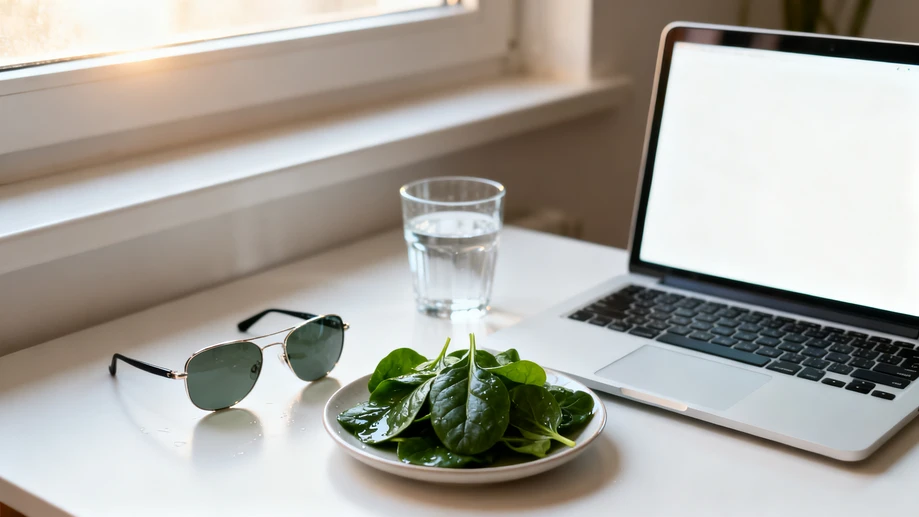
A few tiny unnoticeable lifestyle changes can deliver massive long-term benefits to your eye health, no expensive products or complicated routines required. Picking up a pair of low-cost UV-blocking sunglasses before you head out on a sunny walk is not just a fashion choice: long-term exposure to unfiltered ultraviolet light will slowly build up minor damage inside your eye, raising your risk of age-related vision problems decades earlier than they would otherwise appear. Adding one small serving of dark leafy greens like spinach or kale to your weekly meal plan gives your body enough lutein and zeaxanthin to support the natural protective layer in your retina’s macular region, the small part of your eye that handles all your fine, detailed vision for reading and recognizing faces. You never need to share contact lenses, glasses or eye makeup with another person, even if you are close friends, because tiny bacteria trapped on the surface of these items can spread easily and cause painful eye infections that will keep you away from work and your favorite activities for days.
Your eyes work nonstop from the moment you wake up in the morning until the second you fall asleep at night, and they only ask for a tiny amount of gentle care in return. You do not need to follow strict fancy routines or spend hundreds of dollars on premium eye care products to keep your vision strong, just a little bit of awareness of how they work and small consistent efforts to avoid unnecessary strain. When you take a short break to look at the trees outside your office window, or grab an extra serving of kale at the salad bar, you are giving a thank-you to one of your body’s most hardworking, underappreciated organs, and it will reward you with years of clear, comfortable vision to watch all of life’s best moments unfold.