
Who Knew Your Most Common Daily Habits Are Secretly Ruining Your Perfect Eyesight
This casual science piece shares easy, no-cost daily eye care tips that require zero extra time to fit into your busy schedule
Most of us brush off mild eye soreness, temporary blurred vision or random stinging sensations as nothing more than normal tiredness after a long workday, assuming a full night of sleep will erase all discomfort completely. We seldom stop to think that the tiny, unnoticeable movements we repeat dozens of times every day could add up to far more damage than a single late-night binge watching a whole season of a new show. You might not even recall that last night you laid on your side in bed scrolling short-form videos, holding the device just 10 inches away from your face until your eyelids grew too heavy to stay open, and you nearly let the phone drop onto your face before you finished the last funny clip on your feed. You might also remember squinting at your phone screen while riding a jolting subway train during morning commute, trying to reply to work messages even when the car shook so hard you could barely make out individual words on the display. None of these actions feel serious enough to cause harm, but they quietly stretch your eye muscles far beyond their regular comfortable range for hours every single week.
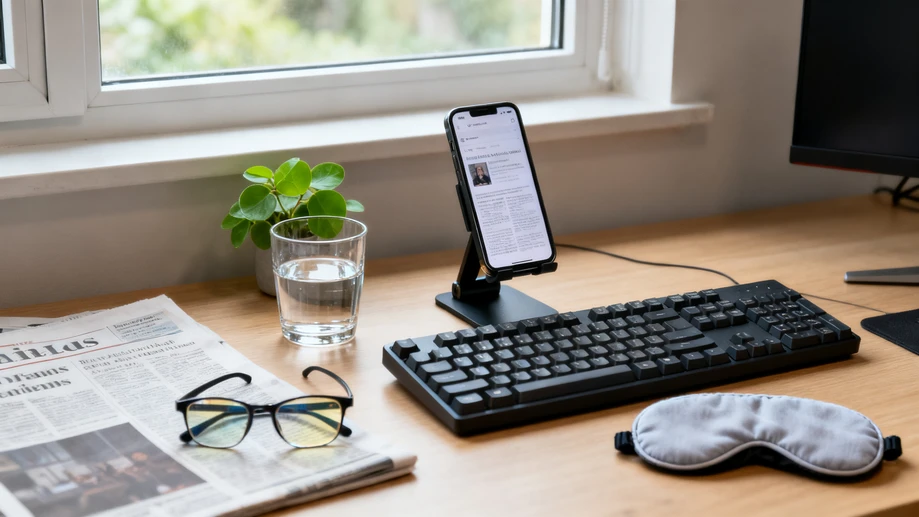
You do not need to follow strict, complicated 30-minute eye care routines or buy expensive specialized eye products to keep your vision in good shape. One of the easiest tricks to stick to is pairing your eye rest breaks with your regular water drinking schedule. Every time you finish a glass of water, stand up slowly, turn your head to face the nearest window, and focus on the farthest point you can spot outside for 30 full seconds. Since most people already aim to drink six to eight glasses of water a day, this habit automatically lets you rest your eyes every one to two hours without you having to set annoying repeated phone alarms to remind you. It is also much simpler to remember than the often cited 20-20-20 rule, which many people forget to follow halfway through a busy workday. Other tiny easy adjustments include stopping the habit of rubbing your eyes roughly with your bare hands after a long day staring at screens, since your hands carry tiny traces of grease from takeout packaging, dust from public doorknobs and other tiny irritants that can easily cause redness and inflammation when pressed directly against the sensitive surface of your eyeballs. If you feel a faint itchy sensation in your eye, blink rapidly a few times to let your natural tear film wash out the small foreign particles instead of reaching up to rub immediately.
A lot of widely accepted small behaviors people think are harmless are actually hidden threats to long term eye health. Many people love dimming all the overhead room lights and only turning on a tiny warm night light before scrolling their phones at night, claiming this setup feels far cozier and more relaxing than keeping the main ceiling light on. What most people do not realize is that your pupils will expand to a very large size automatically in dark surroundings, which lets the bright, harsh light from your phone screen hit your sensitive retina directly without any softening filter. If you keep this routine for a whole week, you will notice it suddenly gets much harder to make out distant street signs clearly when you walk outside after dark. Another common mistake is sliding your frame glasses down to the tip of your nose and peeking over the top edge of the frames to look at people or objects far away, which makes your eye muscles twist and stay tense for long periods. People who keep this habit for months develop astigmatism twice as fast as people who wear their glasses the correct way. You should also stop using steaming eye masks that heat up to a scalding high temperature, because anything hotter than 42 degrees Celsius will break down the stability of your tear film instead of soothing your eye area. A gentle, warm temperature similar to the outer surface of a just-made cup of milk tea is the perfect heat level, and keeping the mask on for no more than 5 minutes works far better than leaving it on for 20 minutes or longer.
These small, low effort adjustments will bring you very noticeable positive changes after just two or three weeks of consistent practice. When you stare at a computer screen for work, remind yourself to blink a few extra times every few minutes, since the average person only blinks 5 to 6 times per minute when focused on a screen, far less than the normal 15 blinks per minute during relaxed states. Keeping your blink rate at around 10 times per minute will keep your tear film spread evenly across the surface of your eyeballs, so you will not feel that uncomfortably dry sensation that makes your eyes stick to the surface of your glasses as soon as you finish your work for the day. On bright sunny days, grab a regular wide brimmed sun hat or a cheap pair of qualified UV blocking sunglasses before you step outside, instead of squinting directly at the bright sky without any protection. Long term exposure to unfiltered UV rays speeds up the aging process of the lens inside your eye, and many people who experience obvious vision loss in their 40s and 50s never paid attention to simple eye sun protection when they were younger. All these good habits take no extra money and almost no extra time to maintain, and they fit perfectly into your existing daily routine without you having to rearrange your whole schedule. Over time you will find that the random stinging, excessive tearing and frequent blurred vision you used to experience after long days out at work will gradually disappear, and you will be able to keep sharp, comfortable vision for far longer than you expected.