
Have You Been Accidentally Hurting Your Eyes All This Time
This casual, fun guide breaks down overlooked small daily moves that wear on your vision, and shares easy no-fuss fixes you can start using today.
Many of us wake up and grab our phones within the first 10 seconds after opening our eyes, squinting at notification previews with the screen pressed barely 20 centimeters from our face, in a pitch black room where our pupils are fully dilated to take in any available light. Most people brush this habit off as a harmless morning routine, never stopping to think that the tiny muscles controlling lens shape inside their eyes are being forced to hold an extreme tight position for every second they scroll through short videos, check group chats, and flip through news feeds before even getting out of bed. The cumulative effect of this repeated muscle tension does not show up overnight, but after a few months you will notice you cannot read street signs from the other side of the road anymore, and your eyes stay stinging and dry even after you splash cold water on your face to wake up. Many of us also rub our eyes roughly with the heel of our palm when we feel a tiny itch, pressing hard against the delicate surface of our eyeball, dragging dust, leftover hand cream, and tiny stray fabric fibers straight onto the thin tear film that keeps our eyes moist. People who wear contact lenses often slip straight into a hot shower without taking their lenses out, not realizing the steam traps tiny protein deposits on the surface of the lens, leaving a blurry haze over your vision for hours after you step out of the bathroom.
Office workers often make a set of unspoken small mistakes at their desks that add up to far more eye strain than they realize. A lot of people think they are following good eye care rules when they stare out the window for a minute, but they end up locking their gaze on a shiny glass skyscraper across the road that is reflecting direct bright sunlight. That harsh reflected glare forces their pupils to shrink rapidly over and over again, making their eyes twice as sore as they would be if they had just looked at a patch of green trees ten meters away. After a long day of work, many of us collapse on the couch at home and turn on only one tiny dim side lamp to binge watch a show on our laptop, thinking the mood feels cozy and relaxing. The problem is when the brightness difference between your screen and the surrounding room is more than three times higher than the recommended level, your eyes will automatically adjust their pupil size every three seconds to compensate for the uneven light, and by the time you finish two episodes of your show, your eye fatigue levels are equal to what you would experience if you went for a long 90 minute walk directly under unshaded midday sun. Many of us also drink iced coffee, sugary iced tea, and iced soda through the whole workday and completely forget to drink plain water, and the first sign of mild dehydration in your body is not a dry mouth, it is a sudden drop in tear production, so the thin protective layer of moisture covering your eyeball evaporates completely in 10 minutes no matter how many times you blink.
Almost everyone has heard of the popular 20-20-20 rule for eye care, but a huge number of people are using the method completely wrong, and not getting any of the promised relief for their tired eyes. The rule tells you to look at something at least 20 feet away for 20 seconds every 20 minutes while working on a screen, but many people follow it by locking their eyes straight on a distant object, holding their eyelids wide open and forgetting to blink for the full 20 seconds. That habit does nothing to moisturize the surface of your eye, and can even leave you feeling drier than you did before you paused. The correct version of this routine is far simpler: after you pull your eyes away from your screen, blink slowly three full times to spread fresh tear fluid across your eyeball, then let your vision go soft and unfocused on a distant patch of greenery while continuing to blink at your normal relaxed pace, and this adjusted version will cut your eye strain by more than 60 percent compared to the stiff incorrect method. A lot of people also spend a lot of money on expensive blue light blocking glasses, and end up wearing them everywhere they go, even on bright sunny days outdoors. The yellow tint of those lenses makes your brain think the surrounding environment is darker than it actually is, so your pupils open much wider than normal, letting far more harmful UV rays hit the inside of your eye than they would if you did not wear the glasses at all. This unnecessary extra UV exposure can make your eye muscles tired faster, and even speed up the natural clouding of your lens as you get older, turning a supposed eye care investment into something that actively hurts your long term vision.
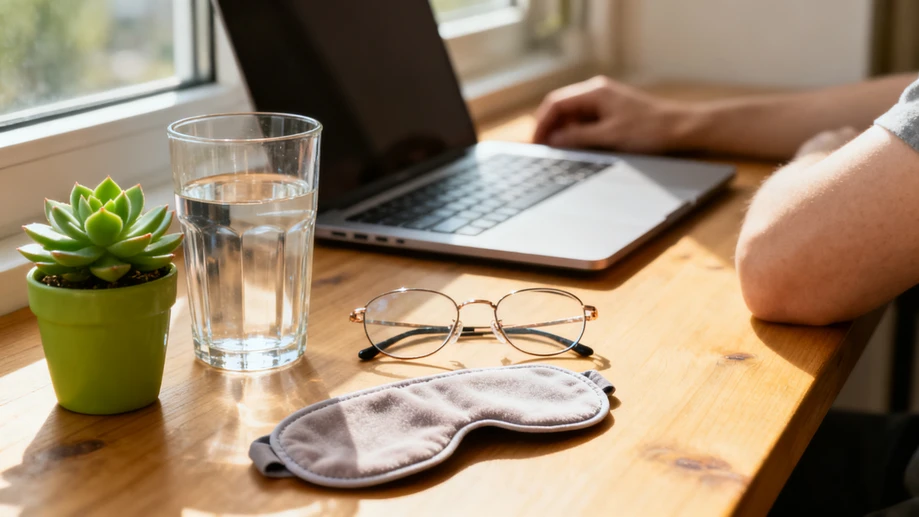
You do not need fancy expensive eye care tools or special medical grade products to protect your vision on a daily basis, most of the most effective habits take less than 30 seconds to complete, and cost you absolutely nothing extra. Every time you stand up to walk to the kitchen to refill your water bottle, pause for 30 seconds right next to a window that does not face direct bright sunlight, close your eyes and let soft diffused natural light fall gently on your eyelids. The tiny blood vessels under your eyelid will absorb that gentle natural light to boost your circulation, and melt away the tight dull ache that builds up in your eye muscles after hours of staring at a screen. After you wash your hands at the bathroom sink, rub your two palms together rapidly for 5 seconds to build up soft gentle warmth, then rest those warm palms lightly over your closed eyes without pressing down on your eyeballs at all. That warm soft sensation will relax your tensed up ciliary muscles in less than 15 seconds, and leave your feeling of eye soreness gone for far longer than a drop of cooling medicated eye drops, which often wash away your natural protective tear film along with the irritation. You can also keep a small potted succulent or tiny potted mint plant right next to your monitor on your desk, so every time you glance away from your screen you can land your eyes on a patch of soft green, which does not force your eyes to focus sharply on any small detailed object, and lets them drift into a naturally relaxed state for free.
A lot of people rush to get a new thicker pair of prescription glasses the second they notice a few days of blurry vision, but most short periods of fuzziness are not a sign that your permanent degree of nearsightedness has increased. That temporary blurriness is almost always a sign that your eye muscles have been tensed up and locked in a tight position for too long, and if you spend two or three days following these simple small daily habit adjustments, your vision will clear back up completely without the need for a stronger lens prescription. Taking good care of your eyes does not need to be a complicated high effort chore that requires you to rearrange your whole daily schedule. All you have to do is catch those tiny easy to miss mistakes you were doing without noticing, give your eyes a few seconds of gentle care every hour, and you will be able to keep enjoying perfectly clear vision for decades. You will never have to squint and lean in closer to read the text on a cafe menu, you will never miss the bright silly expression on your friend’s face when they make a joke, and you will be able to see every soft shade of orange and pink in every sunset you watch, no squinting, no blurriness, no extra effort required.