
5 Unexpected Habits That Rescue Your Eyes From Digital Exhaustion
Discover how simple tweaks to your daily routine can save your vision without sacrificing screen time
Ever feel like your eyes are staging a protest after hours glued to screens? You're not alone. Our modern lives demand constant visual attention – from sunrise emails to midnight scrolling – turning our precious peepers into overworked employees. The average person now blinks 66% less while using devices, creating dry, irritated eyes that feel like desert landscapes. But here's the twist: protecting your vision doesn't require abandoning technology or living in candlelight. Simple, scientifically-backed habits woven into your day can become your eyes' invisible superhero cape.
Begin with the magical 20-20-20 rule – your digital age lifeline. Every twenty minutes, pause your screen marathon to gaze at something twenty feet away for twenty seconds. This tiny reset button allows your ciliary muscles (the eye's focus adjusters) to relax from their constant near-vision contraction. Boost effectiveness by pairing this with conscious blinking exercises: close your eyes gently for two seconds, then open slowly. Try setting these mini-breaks to coincide with drink sips or posture checks. These micro-habits form cumulative defenses against digital eye strain's creeping fatigue.
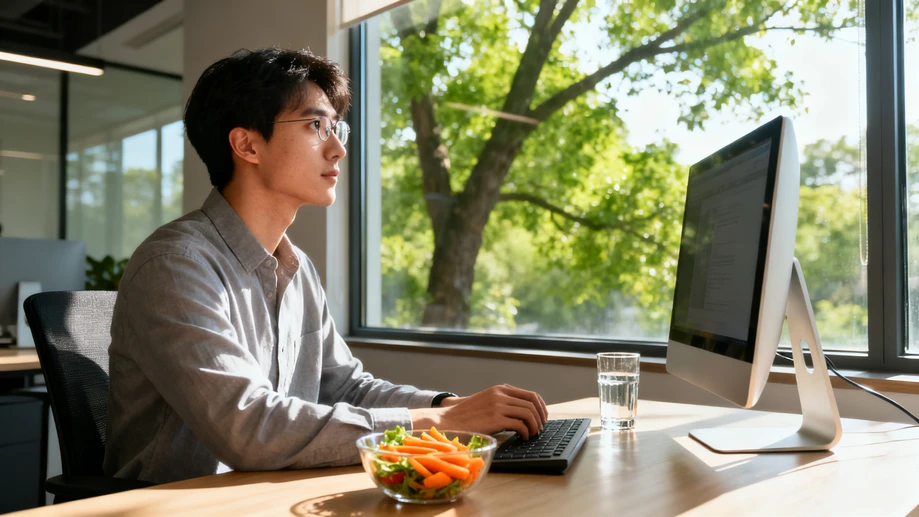
Transform your environment into an eye sanctuary through lighting alchemy. Position monitors perpendicular to windows to avoid glare battles, and dim overhead lights in favor of softer task lighting. Enable blue light filters on devices after sunset while maintaining brightness slightly lower than ambient light – your screen shouldn't mimic a flashlight. Introduce the "three-finger rule": keep screens at least the distance from your eyes to where your knuckles meet your palm when extending your arm. For book lovers, position reading material slightly below eye level to reduce eyelid exposure and moisture evaporation.
Your kitchen secretly stocks eye-saving nutrients that rival expensive supplements. Build meals around omega-3 rich fish like salmon, zinc-packed pumpkin seeds, and lutein-loaded dark leafy greens. Snack on colorful produce: orange bell peppers deliver vitamin C to strengthen blood vessels in the retina, while purple berries contain anthocyanins that boost night vision. Hydration plays double duty – water maintains tear film integrity while helping flush toxins. Try "hydration pairing": sip water each time you check messages. This nutritional armor combats oxidative stress from blue light exposure.
Don't underestimate outdoor time's vision benefits. Natural daylight regulates dopamine production that prevents abnormal eye elongation (a myopia risk factor). Aim for two hours daily of non-sunglass outdoor exposure – but never stare directly at the sun. Cloudy days still deliver 10 times more beneficial light than indoor spaces. During lunch breaks, walk under trees instead of scrolling in break rooms; the shifting focus between near leaves and distant horizons gives eyes a natural workout while greenery soothes visual fatigue. Consider these outdoor moments your retina's daily spa treatment.
Commit to annual eye check-ups even without noticeable symptoms. Optometrists spot early changes like digital eye strain patterns or pre-presbyopia adjustments before you perceive them. Bring your most-used devices to appointments – specialists can measure ideal working distances and recommend personalized lens coatings. For contact lens wearers, replace cases monthly and never sleep in daily disposables. Remember the "eye injury trifecta": wear UV-blocking sunglasses year-round, use safety goggles during DIY projects, and never share eye makeup. Protecting your vision isn't about restriction – it's about empowering your eyes to thrive in our dazzling digital world.