Are You Still Falling for These Eye Health Fairy Tales?
Five Persistent Myths Debunked by Science That Could Change How You See the World
We've all heard them whispered in offices, shared in schoolyards, and posted online with confident emojis – those nuggets of "common knowledge" about eye care. Some sound logical enough to slip past our critical thinking radar, while others feel like they've been around since Benjamin Franklin invented bifocals. But let me tell you a secret: many of these eye-care commandments are pure fiction. Prepare to have your vision (of the truth) cleared as we expose five stubborn eye myths that science has spectacularly debunked. Forget what your grandma told you; it's time for some optical myth-busting!
First up: the persistent belief that staring at green walls or lush plants magically protects your peepers. Sorry to kill the vibe of your mint-colored Zoom background, but that green poster beside your monitor isn't doing jack squat for your eye strain. Research shows it's not the color that matters but visual distance variation. Ophthalmologists confirm the real hero is the "20-20-20 rule": every 20 minutes, look at something 20 feet away for 20 seconds. This forces muscles controlling your lens shape to relax. Surprisingly, a grey brick wall 20 feet away trumps a vibrant green cactus on your desk. The myth likely sprouted because distant nature scenes often feature green, but correlation isn't causation!
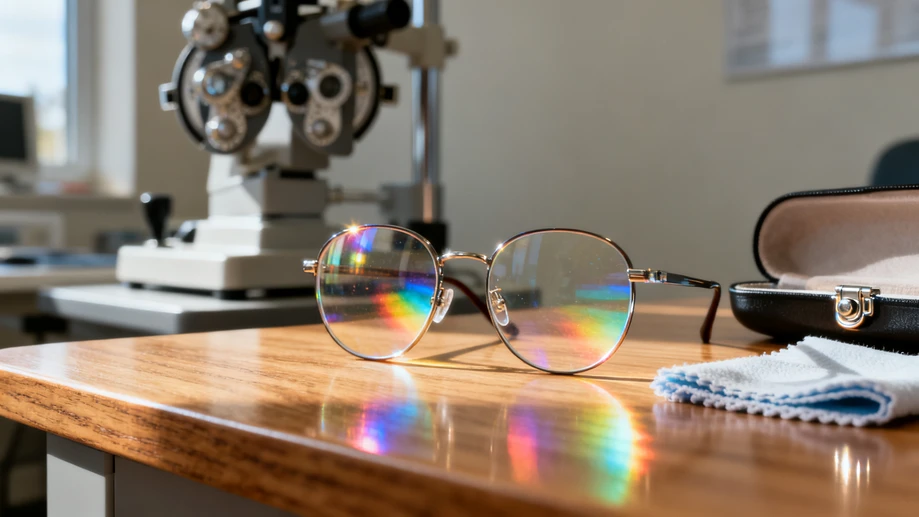
Another head-scratcher? The panic that wearing prescription glasses somehow weakens your eyes like unused muscles. This one's been around longer than hipster spectacles! Let's set the record straight: your glasses are trainers, not crutches. Multiple studies prove corrective lenses don't accelerate vision decline – quite the opposite. When children with refractive errors go uncorrected, their visual development can stall permanently in a condition called amblyopia. Adults straining to see road signs without glasses create chronic eye fatigue that can trigger headaches and dry eyes. The truth? Your glasses optimize focus, reduce eye fatigue, and prevent dangerous squinting-induced wrinkles. Think of them as performance enhancers for your eyeballs!
Then there's the techno-terror tale: using smartphones in the dark causes retinal damage or early cataracts. Cue generations of parents confiscating phones after sunset! While digital eye strain is real (hello, dry eyes and headaches!), the blue light panic is overblown. Harvard Medical School confirms modern LED screens emit negligible UV radiation compared to sunlight. Cataracts form from cumulative UV exposure over decades – primarily from actual sunshine, not Instagram scrolling. The real villain? Screen proximity! Holding devices closer than 16 inches forces extreme focusing effort, causing temporary blurred vision. Solution: increase text size and hold devices farther away. And no, those expensive blue-light filters aren't scientifically proven eye-savers – they're mostly placebo with subscription fees!
Let's chew on a classic dietary delusion: carrots giving you night-vision superpowers. This WWII propaganda myth (created to hide radar technology) persists despite modern science! While vitamin A deficiency does cause night blindness, excess carrots won't sharpen your vision beyond normal levels. A Johns Hopkins study demonstrated that once vitamin A needs are met (easily done with balanced meals), additional beta-carotene provides zero visual advantage. In fact, overdosing can turn you orange! Meanwhile, nutrients like lutein (found in eggs and kale) and omega-3s (in fish) provide more proven retinal protection. But the biggest hero might surprise you: water! Dehydration thickens tear fluid, causing blurred vision many mistake for needing glasses.
The granddaddy of all eye myths? "If you're nearsighted, you'll escape reading glasses in old age!" Nope, Father Time comes for everyone's lenses. Presbyopia – the age-related lens stiffness requiring reading glasses – hits nearsighted folks just like everyone else around age 45. Your existing myopia might mean you can read menus by simply removing distance glasses initially, but true presbyopia still develops. Optometrists see confused patients daily who thought their nearsightedness granted immunity. The hilarious irony? Many end up needing bifocals earlier than their 20/20-vision peers to reconcile both conditions. It's nature's equal-opportunity eye challenge!