Your Eyes Hate You for These 5 Daily Habits
Stop sabotaging your vision before it's too late
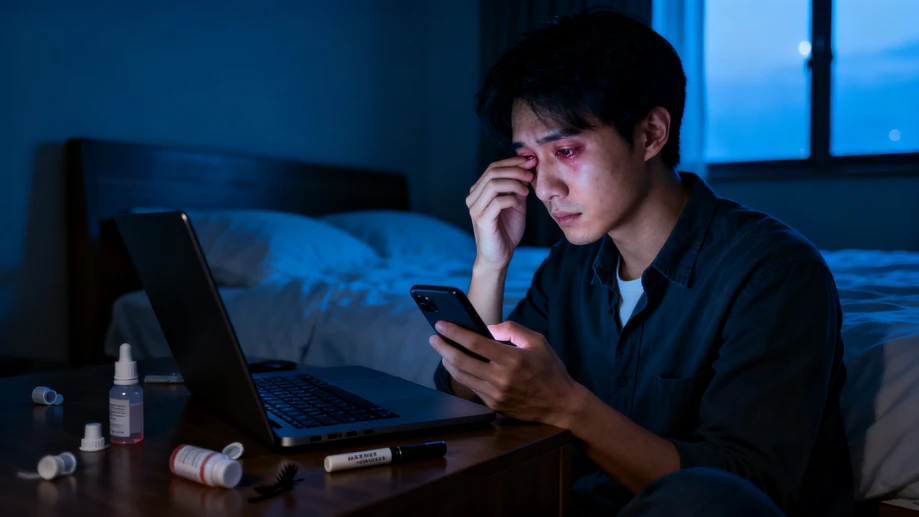
Picture this: you wake up and immediately check your phone, squinting at the blinding screen in the dim morning light. After eight hours of non-stop computer work (with occasional Instagram breaks), you binge-watch Netflix in bed until midnight. Sound familiar? Congratulations – you're running a demolition derby for your eyeballs. Modern life has turned us into unwitting vision vandals, but the scary truth is that 90% of digital device users experience digital eye strain. Your eyes won't scream in protest – they'll just slowly surrender. But here's the twist: fixing your ocular offenses is easier than pronouncing "ophthalmologist".
Let's start with screen time sins. The 20-20-20 rule isn't just catchy alliteration – it's your eyeball's lifeline. Every 20 minutes, stare at something 20 feet away for 20 seconds. This simple reset prevents your ciliary muscles from freezing in "close-up mode" like biological concrete. Worse than marathon screen sessions? Doing them in vampire lighting. Dim environments make your pupils dilate like startled owls, exposing your retinas to max-intensity blue light. Solution: ambient lighting that's bright enough to read a paperback beside your screen. Pro tip: night mode isn't just for vampires – enabling it after sunset reduces sleep-wrecking blue light by 60%.
Rub-a-dub-dub, three germs in your eyeball! Rubbing your peepers feels satisfying but plays Russian roulette with your corneas. Every grope transfers bacteria from your hands (which touch elevator buttons and subway poles) directly onto your eyeball's delicate surface. The aftermath? Potential infections like conjunctivitis or scratched corneas that feel like having sandpaper eyelids. When itchy eyes strike, press a cool compress against closed lids instead – it's like a spa day for irritated eyes. And while we're discussing hygiene: never share eye makeup, and ditch mascara after three months unless you fancy bacterial parties on your lash line.
You wouldn't drink expired milk, so why put ancient eye drops in your eyes? Preservatives in most eye solutions break down after 28 days of opening, turning your "refreshing" drops into a petri dish of microbes. Solution: write opening dates on bottles with Sharpie. Dry eye sufferers, listen up: "redness-relief" drops are drug-induced camouflage that actually worsen dryness long-term. Opt for preservative-free artificial tears instead – they come in tiny single-use vials perfect for your desk drawer emergency stash. Remember: if your eyes feel chronically gritty, skip the self-medication and visit an eye professional. Dry eyes can sometimes signal autoimmune conditions – your peepers are excellent whistleblowers.
Thinking sunglasses are just summer accessories? Think again. UV radiation damages eyes year-round, causing cataracts and macular degeneration – the leading cause of blindness in seniors. Clouds block only 20% of UV rays, meaning winter sports without goggles is like microwaving your retinas. Your eyewear checklist: 100% UV protection labels (check for "UV400" or "100% protection against UVA/UVB"), oversized frames that block peripheral light, and polarized lenses for glare reduction. Bonus: polarized lenses make lakes and oceans look Instagram-perfect by eliminating surface reflections. Eye protection with aesthetic perks? Now that's visionary thinking.
Finally, the silent vision killer: skipping eye exams. Unlike your teeth, eyes don't throb when problems arise. Comprehensive eye checks can detect glaucoma (which steals peripheral vision silently), diabetes-induced damage, and even brain tumors through optic nerve examination. Adults should visit every two years, or annually if over 40 or with existing conditions. Here's your game plan: bookmark an optometrist appointment right now before this article disappears into your browser tab graveyard. Your future self will wink at you in gratitude – with eyes that can actually see the sunset details rather than just guessing at orange blobs.