Did You Know Your Eyes Have 7 Hidden Superpowers You Use Every Single Day?
We often treat our eyes as basic input tools but overlook the tiny, intelligent automatic functions that keep us safe and comfortable through every ordinary day.
Waking up in the morning, you reach for your phone on the nightstand before you even fully rub sleep out of your eyes, and your vision snaps into sharp clear focus on the tiny text on the lock screen before you even register you are using an organ. No custom calibration, no manual lens adjustment, no 30 second warm-up period that most high-end digital cameras require to switch between near and far focus. Your eyes pull off that tiny magic thousands of times a day, when you glance down at the coffee mug on your desk, look up at a pedestrian crossing the street, or flick your gaze from a social media post to a friend standing across the room chatting to you. Most people never stop to notice how seamlessly these movements work, until they get a minor case of eye strain that makes even these small actions feel tiring. The human eye can adjust focus between objects 10 centimeters away and 100 meters away in less than one third of a second, a response speed no consumer camera on the market can match even with advanced computational processing.
You blink around 15 times a minute when you are resting, but that number drops by more than half the second you stare at a computer or phone screen. That is not a random quirk, your brain automatically suppresses blinks when you are processing concentrated visual information, because it does not want to miss even a split second of new content. That is also why you blink way more often when you are having a face to face conversation with a person you feel comfortable around, your brain is not prioritizing visual tracking as much as it is processing tone and speech, so it lets your eyes top up that thin protective tear layer on the surface of your cornea regularly. A lot of people drag out their dry eye symptoms for months thinking they need expensive eye drops with special additives, when all they really need to do is set a small reminder to pause every 15 minutes and blink fully 3 times, to spread that natural tear film evenly across the eye surface. Most drugstore eye drops with redness reduction chemicals actually make long term dry eye worse, by narrowing the tiny blood vessels on the eye surface and disrupting the body’s natural self-regulation cycle.
Most people only notice the sharp 2 degree focal area in the center of their visual field, but the rest of their eye picks up movement and changes across more than 180 degrees of their surrounding space, even if they never consciously process that information. That is why you do not walk into a street sign while scrolling through a text message, even if you are not actively looking at the path ahead, your peripheral vision sends tiny instant alerts to your brain before you run into any obstacle. A lot of the mild near-sightedness that develops in teenage years does not come from staring at screens all day, it comes from spending all day looking at objects less than 3 feet away, and never letting that peripheral vision track moving objects at a distance. A 20 minute game of casual frisbee in the park, where your eyes track the flying disk across 20 to 30 feet of open space, works far better for relaxing your eye muscles than any seated eye exercise you can do at your desk. Even a casual walk around the neighborhood after dinner, where you let your gaze drift to look at trees and building tops far away, helps your ciliary muscle release the tight tension it builds up after hours of close-range work.
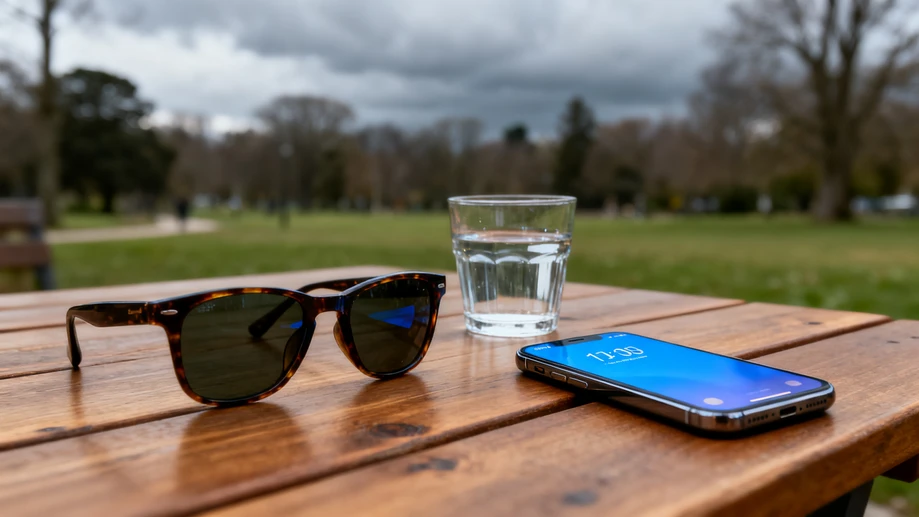
You do not need to avoid using all your screens to keep your eyes healthy, and you do not need to buy fancy blue light filters that cost more than a pair of regular prescription glasses. The real risk factors that harm most people’s eyes over time are small daily habits no one talks about. Skipping sunglasses on cloudy days for example, more than 40 percent of people leave their sunglasses at home when the sky is overcast, not knowing that 80 percent of the sun’s ultraviolet rays penetrate cloud cover completely, and scattered UV light hits the surface of your cornea from every possible angle. Long term exposure to that unfiltered light without protection increases your risk of chronic dry eye and early cataract development far more than 2 hours of screen time a day ever could. You also should not wash your face with overly hot water right after you finish a long work shift in front of a screen, the high temperature breaks down the thin natural oil layer on your eyelid margin that keeps your tears from evaporating too fast, making that post-work eye strain last for another 2 hours after you turn off your laptop.
Over the course of an average 16 hour waking day, your two eyes process close to 10 terabytes of visual information, which is more data than all the photos, videos and music stored on the average home personal hard drive. They do all of that work without requiring regular maintenance, charging periods or expensive software updates, yet most people only pay attention to their eye health once they start having persistent blurry vision that interferes with their daily life. The simple 20-20-20 rule, which asks you to pause every 20 minutes to look at an object at least 20 feet away for 20 full seconds, costs no money and takes barely any extra time out of your work or study schedule, but it can reduce your weekly eye strain symptoms by close to 70 percent if you stick to it consistently. You do not have to treat your eyes like fragile delicate objects that can break with the smallest amount of screen time, all they need is a little bit of conscious, gentle attention to keep running smoothly for decades.