
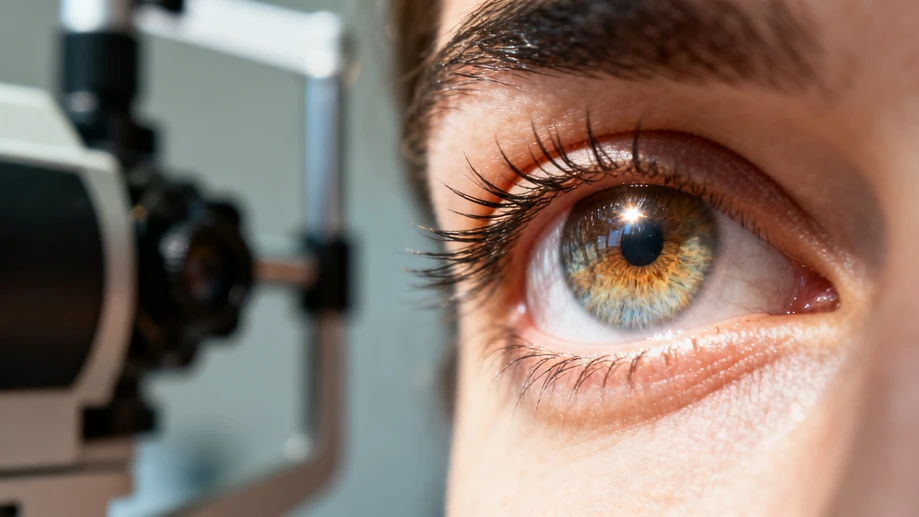
Your Eyeballs Are Time Machines!
Unlocking the Secret Superpowers of Human Vision You Never Knew Existed
Imagine waking up to a world painted in shades of gray, where flowers lose their blush and rainbows appear as mere bands of light. That's the reality for colorblind individuals, but for most of us, our eyes perform this chromatic magic show every second. The secret lies in specialized cells called cones, with three types detecting red, green, and blue light. Your brain then mixes these signals like a painter blending pigments, creating the rich palette of approximately one million distinct colors we perceive daily. Even more fascinating? Our eyes actually detect light outside the visible spectrum—specialized retinal cells sense ultraviolet wavelengths, influencing our circadian rhythms without us consciously seeing them.
Blink and you'll miss it—literally! Humans blink 15-20 times per minute, with each blink lasting just 100-400 milliseconds. This automatic windshield wiper action spreads tears that nourish the cornea, wash away debris, and prevent infection. The tears themselves are a biological marvel—a triple-layered cocktail of water, oils, and mucus produced by separate glands. When you stare at screens, blink rates drop by 60%, causing "digital eye strain." Your eyes protest with dryness because tear film evaporates every 6-10 seconds without replenishment. Ancient Romans once considered blink frequency a truth-detection method; today, optometrists simply warn: remember to blink during Netflix binges!
Ever wonder how night vision works? Step into darkness and witness biology's incremental upgrade. Pupils dilate from 2mm to 8mm—like opening a camera aperture—letting in 16 times more light. But the real stars are rod cells, 1000 times more light-sensitive than cones. They sacrifice color vision for motion detection in low light. This adaptation takes 20-30 minutes, explaining why stargazers avoid phone screens. Here's the trade-off: rods cluster in peripheral vision, making faint stars vanish when you look directly at them. Pirates wore eyepatches not just for wounds—they kept one eye dark-adapted for below-deck navigation!
Your eyes aren't cameras—they're prediction machines. Human vision has a built-in 0.1-second delay, meaning you technically experience the past. To compensate, your brain constantly forecasts motion like a sports commentator anticipating plays. This predictive coding explains why you catch fastballs and why optical illusions trick you. When something moves toward your face, your eyelids slam shut in 0.05 seconds—faster than conscious thought. This blink reflex uses a direct neural shortcut bypassing the brain, proving your eyes have their own emergency protocols.
The eye-brain partnership reshapes reality itself. We see the world right-side-up despite our retinas projecting upside-down images because the brain flips the picture. Depth perception is a constructed illusion merging two flat images from eyes spaced 6cm apart. Each eye contributes unique data—your dominant eye focuses while the peripheral-seeing non-dominant eye monitors for threats. This teamwork creates the "saccade" phenomenon: eyes darting 3-4 times per second to build a mental map. That's why reading feels smooth despite your eyeballs performing microscopic jumps between words.
Protecting these organic wonders is simpler than you think. Follow the 20-20-20 rule: every 20 minutes, look at something 20 feet away for 20 seconds to reset focus. Wear UV-blocking sunglasses year-round since snow reflects 80% of ultraviolet rays—double water's reflectivity. Eat spinach and salmon rich in lutein and omega-3s to boost macular pigment. Annual checkups detect silent thieves like glaucoma before damage occurs. Remember: your eyes evolved over millennia to track gazelles, not Instagram reels. Give them prehistoric respect in our digital age, and they'll keep showing you tomorrow's sunrise in glorious technicolor.